Eco Cups UK: Buying Guide — Specs, Pricing & How to Choose
Eco cups are reusable drinking cups made from food-safe, BPA-free polypropylene (PP) that replace single-use plastic at festivals, stadiums, bars and events. Built to survive 100-plus dishwasher cycles, UK-made ones come in 330 ml to 1,100 ml sizes, cost from around £0.34 per cup at volume, and are recyclable or closed-loop returnable at end of life.
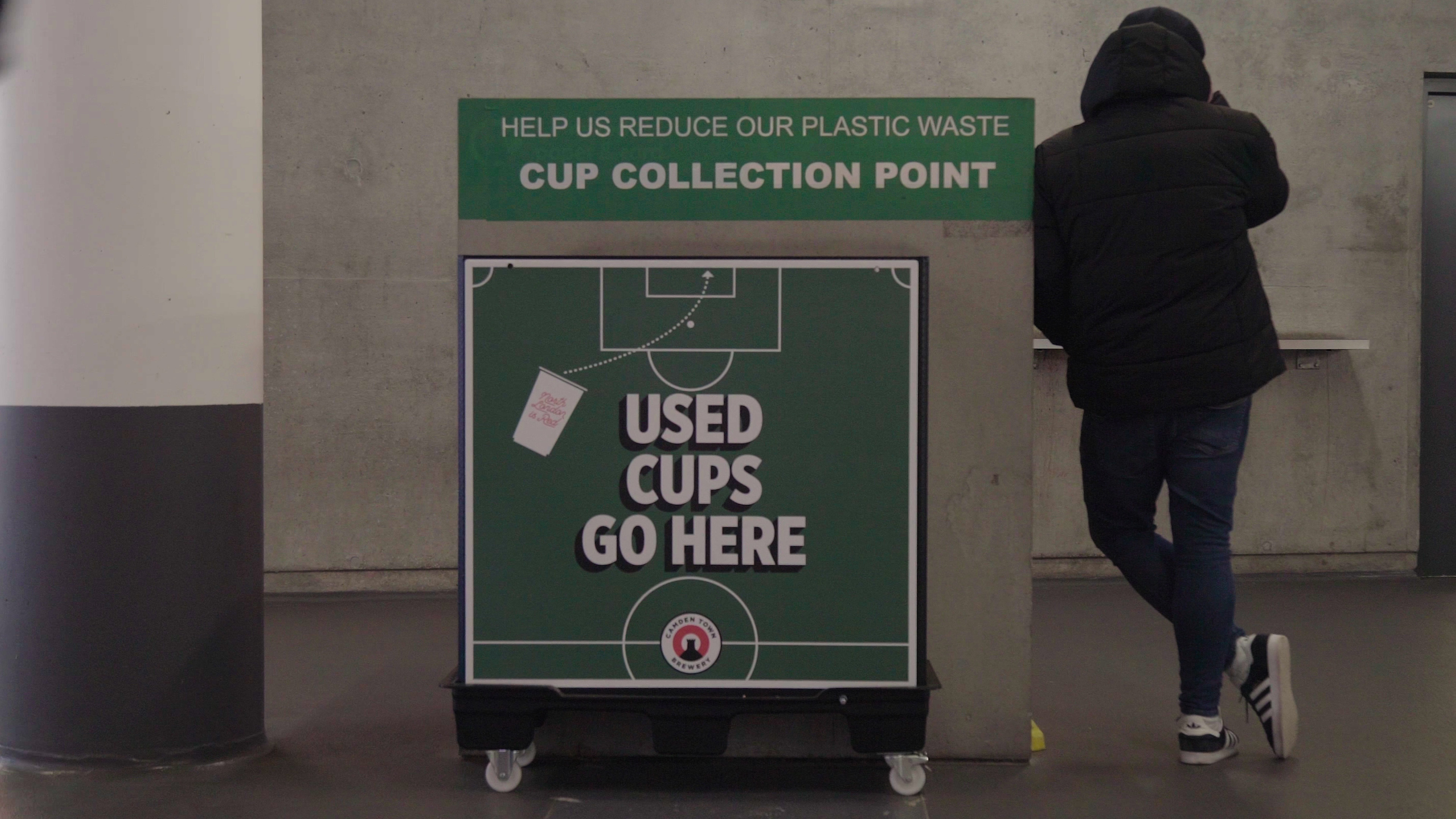
This is a buying guide, not a sales pitch — what the cups are, how to size and spec them, what they realistically cost, how to look after them, and what happens when they are finally worn out. The figures come from our own production line in Stockton-on-Tees, so they are specs, not estimates.
What makes a cup an "eco cup"
The name is earned by reuse, not by a label. Ours are injection-moulded from rigid PP — food-safe, BPA-free, and tough enough to be dropped, stacked and washed hundreds of times. One reusable cup used across a season quietly replaces dozens of disposables.
Two things decide how eco a cup really is:
- Durability — a cup that cracks after a handful of uses is not sustainable whatever it says on the side. Ours are built for 100+ wash cycles.
- End of life — PP is widely recyclable in the UK, and worn cups can be returned to us for re-granulation rather than binned.
We do not sell these as compostable or plant-based. At event scale those materials rarely perform and rarely actually get composted. Reuse is the honest win.
Sizes and specs
Every cup is UKCA-marked with legal gauge lines where required, and all are dishwasher-safe and stackable:
| Cup | Capacity | Material | |
|---|---|---|---|
| Half pint to brim | 330 ml (360 ml max fill) | PP, BPA-free | Single / full-colour |
| Pint to line | 568 ml (legal pint) | PP, BPA-free | Single / full-colour |
| Pint to brim | 600 ml | PP, BPA-free | Single / full-colour |
| Two pint | 1,100 ml (32 oz) | PP, BPA-free | Single / full-colour |
The same mould family also runs 460 ml and 625 ml where a specific fill line is needed.
What eco cups cost
Pricing is per unit and drops as volume rises. A custom full-colour pint runs £1.65 each at 50 units down to £0.42 at 100,000 on the standard tier; the Eco Saver tier reaches £0.25. Half-pints and single-colour prints cost less again, the minimum order is 50 cups, and there is no separate setup fee. For the full ladder, see the wholesale and bulk pricing breakdown.
Looking after them: wash life and durability
Reuse only counts if the cups survive it, so this matters more than any eco claim.
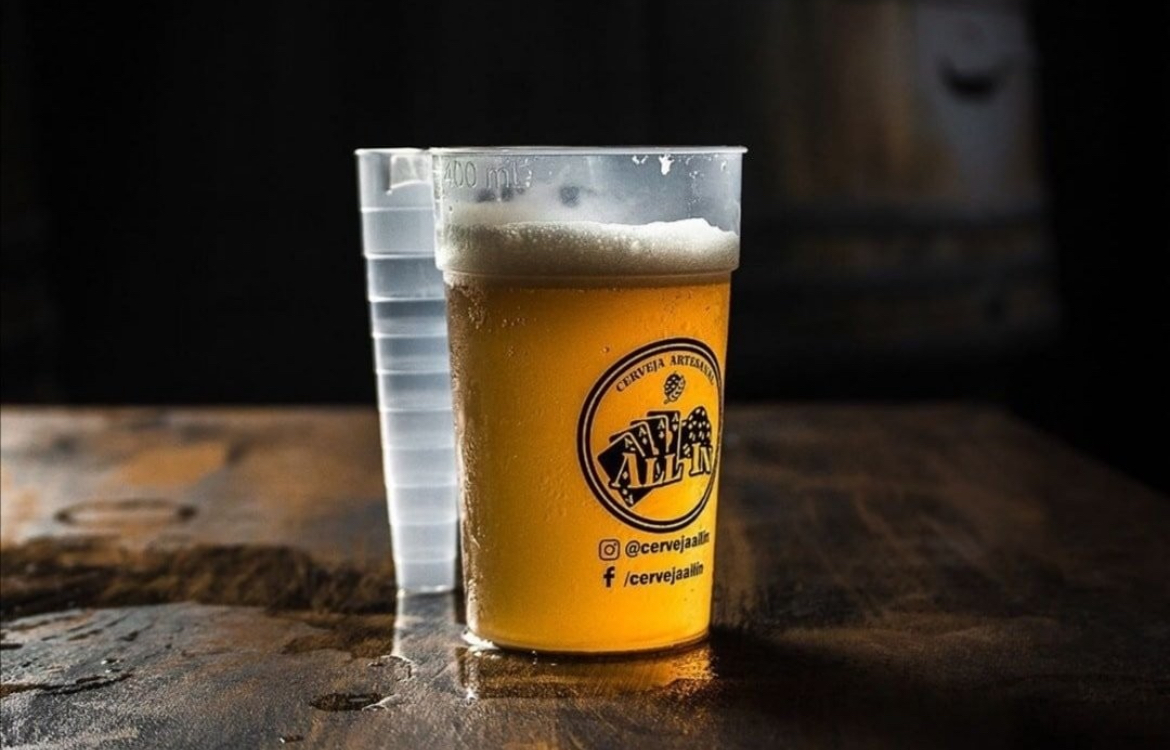
- Wash cycles: 100+ dishwasher passes is realistic for PP. The print is in-mould or bonded, not a sticker, so it does not peel in the wash.
- What kills a cup early: near-boiling water and aggressive industrial sanitiser cycles can stress and cloud PP over time; grinding cups underfoot at a festival cracks them faster than any wash ever will. Standard commercial dishwashers at normal temperatures are fine.
- Guidance: wash at standard commercial dishwasher temperatures, air-dry stacked, and store dry. Handle collection carefully — the cup lost to a boot heel is the one that did not get reused.
End of life: how the closed loop actually works
Closed loop gets thrown around loosely, so here is the plain version. When cups reach the end of their usable life — cracked, heavily scratched, or surplus after an event — they come back to us. We sort them, shred them, and re-granulate the PP into raw feedstock that goes back into moulding new cups. Because it is a single, known polymer (not a mixed material), it recycles cleanly. Where a batch cannot be returned, PP is still accepted by widespread UK kerbside and commercial recycling. The goal is simple: a worn cup becomes a new cup, not landfill.
How eco cups get branded
Branding uses in-mould labelling (IML) or print for a full-colour, edge-to-edge wrap that survives repeated washing — unlike stickers or cheap pad print. It is the same finish major festivals and stadiums specify. The custom printed eco cups guide covers artwork specs, colours and turnaround.
Who uses them
Festivals and outdoor events are the biggest users — a reusable scheme slashes ground litter and often sits inside a licence or sustainability commitment. Stadiums, bars, universities and brand activations follow. If you are planning event stock, the festivals and events guide covers quantities, deposit schemes and washing logistics. And if you want the straight environmental case, eco cups vs plastic cups lays it out without the spin.
Why buy direct from the manufacturer
Most eco cup sellers are resellers importing stock and adding margin. Direct from us means a lower price (backed by a 10% Price Beat Guarantee), real speed (urgent orders in as little as 48 hours, no import lead times), and one team owning quality from mould to pack.
Frequently asked questions
What are eco cups made of?
Food-safe, BPA-free polypropylene (PP) — rigid, dishwasher-safe, and good for 100-plus washes, which is what makes reuse practical.
How many times can you reuse one?
100+ dishwasher cycles is realistic. What ends a cup early is usually physical damage (being trodden on), not washing.
What sizes do they come in?
330 ml half pint, 568 ml pint to line, 600 ml pint to brim and 1,100 ml two pint are standard, with 460 ml and 625 ml options in the same family.
What is the minimum order and price?
50 cups minimum, from around £0.34 per cup at volume, with no separate setup fee.
Are they recyclable?
Yes. PP is widely recyclable in the UK, and worn cups can be returned to us for re-granulation into new stock.
Are they dishwasher-safe?
Yes — wash at standard commercial dishwasher temperatures and air-dry stacked.