Navigating the Changing Legal Landscape
In recent years, the UK government-across England, Scotland, and Wales-has introduced increasingly stringent bans on single-use plastics. For festival directors, stadium operators, and local event organisers, these legislative changes have completely altered how food and drink must be served. Items like single-use plastic plates, trays, bowls, cutlery, and expanded polystyrene cups are now heavily restricted or banned entirely. But how does this legislation affect the standard plastic pint cup used at your event bars? In this guide, we break down what you need to know to keep your event compliant, sustainable, and future-proofed against further regulations.
The Confusion Around 'Biodegradable' Plastics (PLA)
When the initial crackdowns on single-use Polyethylene Terephthalate (PET) began, many event organisers panicked and switched to Polylactic Acid (PLA) cups. PLA is often marketed as a 'plant-based' or 'biodegradable' alternative because it is derived from cornstarch rather than fossil fuels.
However, from a legislative and environmental standpoint, PLA is a dangerous grey area. UK environmental regulators still classify PLA as a single-use plastic. Why? Because PLA cups do not break down in a natural environment or a standard compost bin. They require specialised industrial composting facilities operating at high temperatures. Since the vast majority of UK festivals do not have dedicated waste streams routed to industrial composters, these cups end up in landfill or incinerators-acting exactly like the single-use plastics the bans were designed to eliminate.
Comparing Your Drinkware Options
To help you understand the true impact of your procurement choices, we have compared the three most common types of event drinkware against current legislation, environmental impact, and operational costs.
| Drinkware Type | Regulatory Status | Waste Management Impact | True Eco-Friendly Status |
|---|---|---|---|
| Single-Use PET | Highly targeted by upcoming bans and local council restrictions. | High volume of bin bags, massive post-event cleanup costs. | Poor. Causes severe littering and micro-plastic pollution. |
| PLA (Cornstarch) | Still classified as single-use plastic by UK authorities. | Contaminates standard recycling streams. Must go to landfill if not sorted perfectly. | Misleading. Only green if sent to rare industrial composters. |
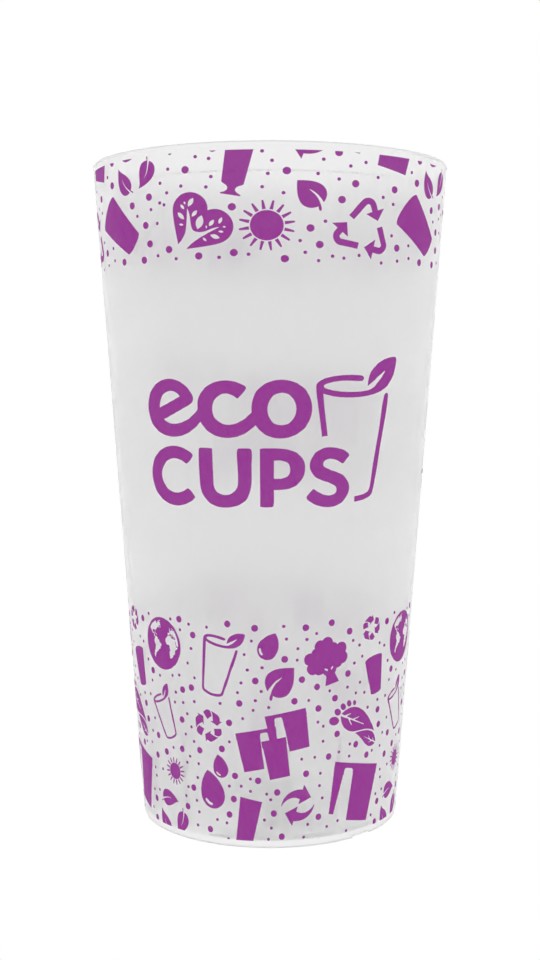
| Reusable PP (Eco Cups) | 100% compliant. Encouraged by government waste-reduction initiatives. | Drastically reduces bin volume. Cups are collected, washed, and reused. | Excellent. Closed-loop lifespan, 100% recyclable at end of life. |
Why Reusable Polypropylene (PP) is the Ultimate Solution
The core objective of the UK's environmental legislation is not just to change the type of material we throw away, but to stop throwing things away altogether. This is why transitioning to a circular economy model using reusable Polypropylene (PP) cups is the only truly future-proof strategy.
- Compliance Guaranteed: Because reusable cups are designed to be washed and used hundreds of times, they fall entirely outside the scope of single-use plastic bans.
- Council Approvals: Many local UK councils now require a strict sustainability plan before granting event licenses. Demonstrating a closed-loop reusable cup system makes securing your license significantly easier.
- Durability and Safety: Eco Cups are manufactured from rigid, shatterproof PP. This meets strict police and licensing requirements for outdoor events and stadiums where glass is strictly prohibited.
Actionable Steps for Your Next Event
If you are still relying on single-use or PLA cups, now is the time to transition. Start by auditing your current cup usage and calculating your annual spend on disposable drinkware and waste management (skip hire, litter picking teams, and landfill taxes).
Next, explore implementing a Deposit Return Scheme (DRS). By charging attendees a £1 or £2 deposit for their first Eco Cup, you immediately fund the transition to reusables. Not only does this cover the cost of the cups, but it practically eliminates cup litter overnight, as attendees are financially incentivised to return them to the bar. By partnering with a UK manufacturer like Eco Cups, you can secure factory-direct pricing, reduce your carbon footprint, and ensure your event stays ahead of the legislative curve.